

Nilgiri Langur in Wayanad | Jungle Park Resort

09AUG
Nilgiri Langur in Wayanad | Jungle Park Resort
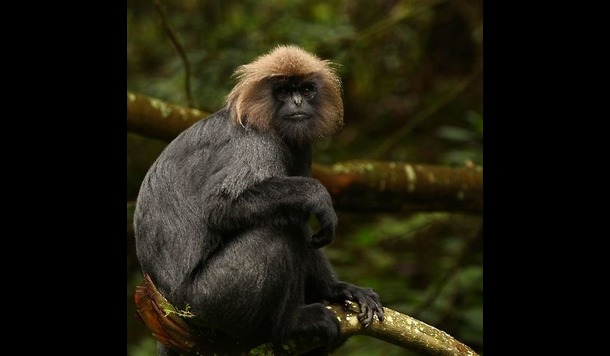
High in the forest canopy of the Western Ghats lives one of South India's most distinctive primates — the Nilgiri Langur. With its dark body, expressive face and striking golden-brown hair around the head and shoulders, this forest-dwelling monkey is very different from the more commonly seen grey langurs of India.
The Nilgiri Langur is endemic to the Western Ghats, with its natural range extending through parts of Kerala, Tamil Nadu and Karnataka. It is closely associated with evergreen forests and other wooded habitats of the region.
The forests surrounding Jungle Park Resort in Wayanad provide an opportunity to experience this remarkable mammal in its natural environment. Sightings are not guaranteed, as these are wild animals that move through the forest according to food availability and their natural behaviour, but guests and nature enthusiasts can occasionally spot them moving through the canopy.
Conclusion
The Nilgiri Langur is one of the animals that makes the Western Ghats so special. Endemic to this mountain landscape, adapted to life in the forest canopy, and classified as Vulnerable, its survival is closely connected to the protection of the forests it calls home.
Around Jungle Park Resort, spotting a Nilgiri Langur is a matter of patience and luck. It may appear high in the trees, move quietly through the canopy or announce its presence with a distant call.
For wildlife lovers, these unexpected encounters are what make a stay in the Wayanad forest memorable — not simply seeing wildlife, but experiencing it where it naturally belongs.
Experience the Forest at Jungle Park Resort
🌿 Book your stay at Jungle Park Resort
What Does a Nilgiri Langur Look Like?
The Nilgiri Langur has a distinctive appearance that makes it relatively easy to distinguish from other langur species.
Its body is predominantly black, while the hair around the head and shoulders can have a contrasting golden or brownish colour. Its long limbs and tail are adaptations suited to life in the forest canopy.
Unlike monkeys that spend considerable time on the ground, Nilgiri Langurs are primarily arboreal, spending much of their time in trees. Their dependence on the forest canopy allows them to move and feed within the upper layers of the forest.
Where Are Nilgiri Langurs Found?
The Nilgiri Langur is restricted to the Western Ghats of southwestern India. It is associated particularly with evergreen and other forest habitats, including higher-elevation forests.
This restricted distribution is one reason the species is so important to the Western Ghats. Unlike widely distributed mammals, the survival of the Nilgiri Langur depends heavily on the continued protection of forests within its natural range.
The Western Ghats is recognised for its exceptional biodiversity and high levels of endemic species. The Nilgiri Langur is one of the mammals that represents the unique wildlife of this landscape.
Nilgiri Langurs Around Jungle Park Resort
Jungle Park Resort is surrounded by natural forest in the Wayanad region, providing habitat suitable for a variety of forest wildlife.
Nilgiri Langurs can sometimes be observed moving through the trees around the forest. Because they spend much of their time in the canopy, spotting one often requires patience and careful observation.
You may notice movement among the branches, hear their calls before seeing them, or catch a glimpse of a troop moving from one section of forest to another.
Rather than being a predictable attraction, a Nilgiri Langur sighting is a natural wildlife encounter — one that depends on where the animals happen to be at that moment.
What Do Nilgiri Langurs Eat?
Nilgiri Langurs are primarily leaf-eating primates. Their diet includes leaves as well as fruits and other plant material.
Their specialised digestive system allows them to make use of a diet rich in leaves, which is characteristic of leaf-eating langurs.
Their feeding behaviour also connects them closely with the forest vegetation around them. By consuming fruits and other plant material, they also participate in important plant-animal interactions within the forest ecosystem.
How Do Nilgiri Langurs Live?
Nilgiri Langurs are social animals and are generally seen in groups. They communicate through calls and other social behaviours while spending much of their time moving through the forest canopy.
Their dependence on connected tree cover is particularly important. Forest fragmentation can make it more difficult for them to move between feeding and resting areas.
This is why protecting continuous forest habitat is important not only for the langurs themselves but also for the wider ecosystem they inhabit.
Why Is the Nilgiri Langur Important to the Western Ghats?
The Nilgiri Langur is more than just a distinctive forest animal. It is one of the species that represents the unique biodiversity of the Western Ghats.
Because it is endemic to this region, protecting Nilgiri Langurs also means protecting the forests on which they depend. Their role as leaf-eaters and fruit consumers connects them with forest vegetation and plant-animal interactions.
The Western Ghats contains an exceptionally high level of animal and plant diversity, including many species found nowhere else. The Nilgiri Langur is one of the mammals that contributes to this unique identity.
Conservation Status of the Nilgiri Langur
The Nilgiri Langur is currently classified as Vulnerable on the IUCN Red List and is protected under Schedule I of India's Wildlife Protection Act.
Its major threats include habitat loss and fragmentation, as well as hunting and other human pressures. Development projects and the conversion of forest areas can further reduce and isolate suitable habitat.
Protecting natural forest corridors and maintaining connected canopy are therefore important parts of conserving this species.
When Is the Best Time to Spot a Nilgiri Langur?
There is no guaranteed time to see a wild Nilgiri Langur. Wildlife sightings depend on the movement of the animals, availability of food, weather and other natural factors.
However, early mornings can be rewarding for wildlife observation because forest activity is generally higher during the cooler hours of the day.
At Jungle Park Resort, guests who explore the surroundings patiently may have an opportunity to observe these animals moving through the forest canopy.
The best approach is not to search aggressively, but to listen for calls, watch the treetops and allow the forest to reveal its wildlife naturally.
A Memorable Wildlife Encounter
Seeing a Nilgiri Langur in the wild can be very different from seeing a primate in captivity or in a conventional tourist setting.
There is no enclosure, feeding area or guaranteed viewing point. You may simply notice a dark shape moving between branches or hear a call from somewhere deep within the forest.
That uncertainty is part of what makes wildlife experiences special.
For guests staying at Jungle Park Resort, a sighting of a Nilgiri Langur can become one of those unexpected moments that stays with them long after the trip.
Why Jungle Park Resort Is Interesting for Wildlife Lovers
Natural forest surroundings in Wayanad
Opportunities for observing Nilgiri Langurs in their natural habitat
Rich birdlife and Western Ghats biodiversity
Off-road forest experiences
Opportunities for wildlife and nature photography
A peaceful environment for slow and responsible wildlife observation