

Malabar Giant Squirrel in Wayanad: A Forest Resident Around Jungle Park Resort

15AUG
Malabar Giant Squirrel in Wayanad: A Forest Resident Around Jungle Park Resort
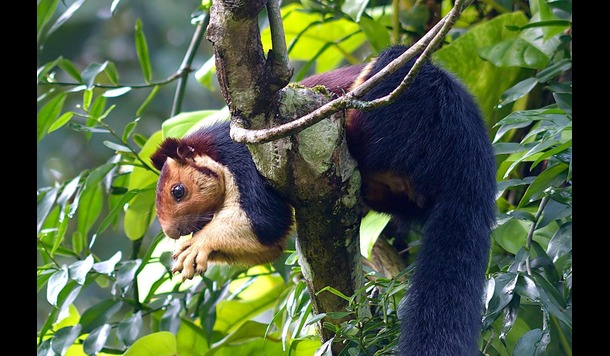
One of the most beautiful sights in the forests of Wayanad is the Malabar Giant Squirrel moving between the branches of tall trees. With its large body, long bushy tail and striking combination of colours, this squirrel is very different from the small squirrels commonly seen around homes and cities.
The forests surrounding Jungle Park Resort provide a natural setting where these squirrels can sometimes be spotted moving through the canopy, feeding on fruits or jumping between branches. For wildlife lovers and photographers, seeing one in the forest can be a memorable part of a stay.
Conclusion
The Malabar Giant Squirrel is one of the distinctive mammals that makes the forests of Wayanad so interesting. Its colourful appearance, impressive movement through the canopy and close connection with the forest make every sighting special.
Around Jungle Park Resort, guests may occasionally catch sight of one moving between the trees or feeding high above the forest floor. There is no guarantee of a sighting, but that unpredictability is part of what makes observing wildlife in its natural habitat so rewarding.
For nature lovers and photographers, keeping an eye on the treetops can reveal an entirely different side of the Western Ghats.
Explore the forests of Wayanad, look out for the Malabar Giant Squirrel moving through the canopy, and experience the rich biodiversity of the Western Ghats during your stay.
🌿 Book your stay at Jungle Park Resort
What Does the Malabar Giant Squirrel Look Like?
The Malabar Giant Squirrel is one of the largest squirrel species found in India. It has a distinctive appearance, with a dark or reddish-brown body, lighter markings and a long, bushy tail.
Its large tail helps it balance while moving through the trees. Its strong limbs and sharp claws also allow it to climb tree trunks and move quickly across branches.
Because it spends much of its time above the ground, you may first notice movement in the canopy before actually spotting the animal.
Where Is the Malabar Giant Squirrel Found?
The Malabar Giant Squirrel is native to the forests of peninsular India and is strongly associated with the Western Ghats.
Wayanad provides suitable habitat for this species because of its extensive forest cover, mature trees and availability of natural food sources.
The forests around Jungle Park Resort form part of this larger Western Ghats landscape, where the species can move through the tree canopy in search of food and shelter.
Malabar Giant Squirrels Around Jungle Park Resort
The Malabar Giant Squirrel is one of the forest mammals that guests may encounter around Jungle Park Resort.
Because the squirrels are active in the canopy, sightings often happen unexpectedly. You may see one crossing a branch, climbing a tree trunk, feeding among the leaves, or quickly disappearing into the forest.
Their movement can be surprisingly fast, so having a camera ready and watching the treetops carefully can make all the difference.
Like any wild animal, sightings are not guaranteed. Their activity depends on food availability, weather, time of day and their natural movement through the forest.
What Does the Malabar Giant Squirrel Eat?
Malabar Giant Squirrels are mainly herbivorous and feed on a variety of plant-based foods available in the forest.
Their diet can include fruits, seeds, flowers, bark and other parts of plants. They may also feed on nuts and seasonal forest produce when available.
Their feeding habits connect them closely with the trees and vegetation that make up their habitat.
How Does It Live in the Forest?
The Malabar Giant Squirrel is primarily arboreal, meaning it spends most of its life in trees.
It moves through the forest canopy using its strong limbs and long tail for balance. It can make impressive leaps between branches and usually prefers to remain above the ground.
This dependence on trees makes mature forest cover particularly important for the species.
Why Is the Malabar Giant Squirrel Important to the Western Ghats?
The Malabar Giant Squirrel is one of the many species that contribute to the ecological richness of the Western Ghats.
As a fruit and seed-eating animal, it interacts closely with the vegetation around it. By moving through the forest and feeding on different plant species, it forms part of the natural relationships between animals and plants.
Its presence also reflects the importance of maintaining healthy forest habitats with sufficient tree cover.
The Western Ghats is home to a remarkable number of endemic species, and protecting its forests helps preserve this unique biodiversity.
Best Time to Spot a Malabar Giant Squirrel
There is no guaranteed time to see a Malabar Giant Squirrel in the wild. However, early mornings and quieter parts of the day can be rewarding for wildlife observation.
The best way to look for them is to pay attention to the treetops rather than only looking along the forest floor.
Listen for movement among leaves and branches, and watch for sudden movement between trees. Sometimes, a squirrel may remain still for several moments before quickly jumping to another branch.
A Wonderful Subject for Wildlife Photography
The Malabar Giant Squirrel is particularly interesting for wildlife photographers because of its distinctive appearance and active behaviour.
Its long tail, contrasting colours and movement through the canopy can create beautiful photographs. However, maintaining a respectful distance is important and photographers should avoid disturbing the animal to get a closer shot.
For beginners, simply learning to spot the squirrel among the leaves can be part of the fun.
Why Nature Lovers Enjoy Jungle Park Resort
Natural forest surroundings in Wayanad
Opportunities to spot Malabar Giant Squirrels in their natural habitat
Rich Western Ghats biodiversity
Forest environment suitable for wildlife photography
Birdwatching and other wildlife observation opportunities
Quiet surroundings for slow and responsible nature exploration