

Jerdon’s Narrow-Mouthed Frog in Wayanad | Jungle Park Resort

21AUG
Jerdon’s Narrow-Mouthed Frog in Wayanad | Jungle Park Resort
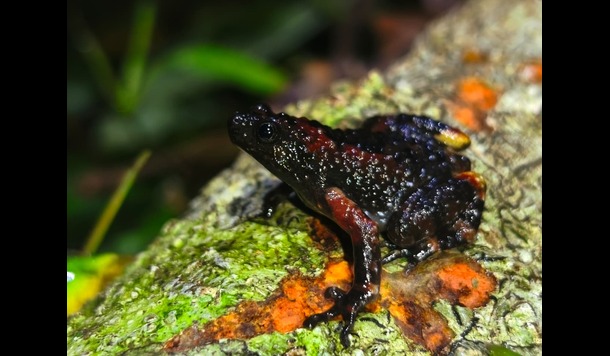
The forests of Wayanad are home to many small creatures that are easy to miss unless you take the time to look closely. Among them is Jerdon’s Narrow-Mouthed Frog, a small amphibian associated with the forests and moist habitats of the Western Ghats.
Unlike larger and more noticeable wildlife, this frog can remain hidden among leaf litter, damp vegetation and other forest surroundings. For nature enthusiasts and macro photographers, finding one can be a rewarding part of exploring Wayanad’s biodiversity.
Conclusion
Jerdon’s Narrow-Mouthed Frog may not be as immediately noticeable as a Malabar Giant Squirrel or a colourful forest bird, but it represents an equally fascinating part of Wayanad’s biodiversity.
Its small size, natural camouflage and association with moist forest habitats make finding one a rewarding experience for anyone who enjoys looking beyond the more familiar forms of wildlife.
At Jungle Park Resort, the forest offers opportunities to notice these smaller details of nature. Sometimes, slowing down and looking closely is enough to discover an entirely different side of the Western Ghats.
Explore the forest surroundings, discover fascinating amphibians and experience the biodiversity of the Western Ghats during your stay.
🌿 Book your stay at Jungle Park Resort
What Is Jerdon’s Narrow-Mouthed Frog?
Jerdon’s Narrow-Mouthed Frog is a small frog belonging to the narrow-mouthed frog family. Its compact body and relatively small mouth are characteristic features of this group.
The frog has a rounded appearance and can blend into its surroundings, which makes it easy to overlook while walking through the forest. Its coloring and markings can vary, helping it remain camouflaged among leaves, soil and vegetation.
Where Is Jerdon’s Narrow-Mouthed Frog Found?
Jerdon’s Narrow-Mouthed Frog is associated with the Western Ghats and other suitable moist habitats in southern India.
The humid climate, forest vegetation and seasonal rainfall of Wayanad create favourable conditions for amphibians. Areas with damp leaf litter, vegetation and moisture are particularly important for small frogs such as this.
The forests around Jungle Park Resort provide a natural environment where guests interested in amphibians and smaller wildlife can explore and observe the biodiversity of the Western Ghats.
Jerdon’s Narrow-Mouthed Frog Around Jungle Park Resort
The forest environment around Jungle Park Resort supports a variety of small creatures that may not be noticed during a quick walk.
During wet weather and after rainfall, amphibian activity can increase. Guests exploring the surroundings carefully may come across small frogs among damp leaves, vegetation and other moist areas.
As with any wild species, sightings are not guaranteed. The frog's small size, camouflage and natural behaviour make patience an important part of finding one.
What Does Jerdon’s Narrow-Mouthed Frog Eat?
Like many small insect-eating frogs, Jerdon’s Narrow-Mouthed Frog feeds on small invertebrates found in its surroundings.
Its diet can include ants and other tiny insects. This makes it part of the natural food web within the forest, helping regulate populations of small invertebrates.
Why Are Small Frogs Important to the Forest?
Frogs play an important role in forest ecosystems. They feed on insects and other small invertebrates while also providing food for larger animals.
Amphibians are also sensitive to changes in their surroundings. Their presence can provide valuable information about the condition of a habitat, particularly in environments where moisture and water quality are important.
The presence of small frog species adds to the overall ecological richness of the Wayanad forests.
Best Time to Look for Jerdon’s Narrow-Mouthed Frog
Rainy and humid conditions can make amphibian observation more rewarding. After rainfall, frogs may become more active around damp vegetation and forest floor habitats.
Evenings can also be a good time for amphibian observation, when the forest becomes cooler and more active.
If you are exploring the surroundings of Jungle Park Resort, moving slowly and looking carefully around leaves, vegetation and moist areas can increase your chances of noticing smaller amphibians.
A Fascinating Subject for Macro Photography
Because of its small size, Jerdon’s Narrow-Mouthed Frog can be an interesting subject for macro and close-up photography.
Photographers can capture details that are easy to miss with the naked eye, including its eyes, skin texture, markings and natural camouflage.
However, wildlife should always be observed without handling or disturbing the animal. Maintaining a respectful distance allows the frog to continue its natural behaviour.
Why Nature Lovers Enjoy Jungle Park Resort
Natural forest surroundings in Wayanad
Rich amphibian and wildlife diversity
Opportunities to observe smaller forest creatures
Suitable surroundings for nature and macro photography
Western Ghats landscape with natural vegetation and moisture
Quiet environment for slow and responsible wildlife observation