

Frogs You Can Spot Around Jungle Park Resort in Wayanad

23JUL
Frogs You Can Spot Around Jungle Park Resort in Wayanad
When people think of wildlife in Wayanad, they often imagine birds, deer, or giant squirrels. However, the forests of the Western Ghats are also home to an incredible variety of amphibians that play an important role in the ecosystem.
During the monsoon and cooler evenings, the forests around Jungle Park Resort come alive with the sounds of frogs. These fascinating amphibians are an important part of Wayanad's biodiversity and are a delight for nature lovers, wildlife photographers, and anyone interested in the rich wildlife of the Western Ghats.
Conclusion
The forests of Wayanad are filled with remarkable wildlife, and frogs are among their most fascinating residents. Their calls, colors, and unique behaviors add another dimension to the forest experience, especially during the monsoon.
At Jungle Park Resort, guests have the opportunity to appreciate not only birds and mammals but also the incredible amphibian diversity that makes the Western Ghats one of the world's most important natural landscapes. Whether you are a wildlife enthusiast, a macro photographer, or simply someone who enjoys spending time in nature, these remarkable amphibians make every forest walk a little more memorable.
🌿 Book your stay at Jungle Park Resort
Why Wayanad is Home to So Many Frog Species
The Western Ghats is recognized as one of the world's biodiversity hotspots. Wayanad's evergreen forests, streams, waterfalls, and humid climate create ideal conditions for amphibians to thrive.
Many frog species found here are endemic to the Western Ghats, meaning they are found nowhere else in the world. This makes the region especially important for wildlife conservation and nature observation.
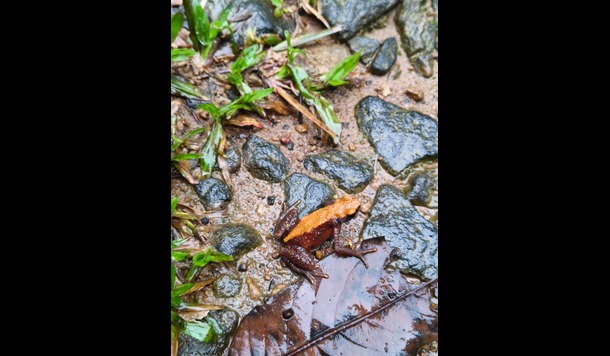
Malabar Dot Frog
The Malabar Dot Frog is one of the interesting amphibians found in the forests of the Western Ghats. Its small size, distinctive markings, and ability to blend into wet forest vegetation make it difficult to spot during the day.
During rainy evenings, its calls become a familiar part of the forest soundscape around Jungle Park Resort.
Wayanad Bush Frog
Named after the region itself, the Wayanad Bush Frog is another endemic species of the Western Ghats.
Unlike many frogs that remain close to the ground, bush frogs are often found resting on leaves, shrubs, and low branches. Their soft calls are commonly heard after rainfall, especially during the monsoon season.
For wildlife photographers, this species offers excellent opportunities for close-up and macro photography.
Malabar Gliding Frog
The Malabar Gliding Frog is one of the most remarkable amphibians found in the Western Ghats. Its bright green body, large eyes, and webbed feet allow it to glide between branches while moving through the forest canopy.
Often called the "flying frog," it is usually spotted near ponds, streams, and water-filled forest areas during the breeding season.
Seeing this species in its natural habitat is a memorable experience for many visitors.
Malabar Torrent Toad
The Malabar Torrent Toad is one of the lesser-known amphibians of the Western Ghats. Unlike many frogs that prefer still water, this species is commonly associated with fast-flowing streams and rocky forest habitats.
Its mottled brown colour helps it blend into wet rocks and stream banks, making it difficult to spot unless you look carefully. During the monsoon, the sounds of flowing water and the activity around forest streams create ideal conditions for observing this unique amphibian.
For nature enthusiasts, finding a Malabar Torrent Toad is another reminder of the remarkable biodiversity that thrives in the forests surrounding Jungle Park Resort.
Why Frogs Are Important to Forest Ecosystems
Frogs are much more than interesting wildlife—they are indicators of a healthy forest ecosystem.
They help control insect populations and are highly sensitive to changes in water quality and climate. A forest with a healthy amphibian population is often a sign of a well-balanced natural environment.
Their presence highlights the ecological richness of the forests surrounding Jungle Park Resort.
Best Time to Spot Frogs
Although frogs may be seen throughout the year, the monsoon season offers the best opportunity for observation.
Evenings after rainfall are especially active, when frogs emerge near forest trails, streams, rocks, tree branches, and damp vegetation.
Guests exploring the surroundings quietly may hear frog calls long before they spot the animals themselves.
Why Nature Lovers Enjoy Jungle Park Resort
Located inside the Western Ghats biodiversity hotspot
Natural forest environment rich in amphibian diversity
Home to the Malabar Dot Frog, Wayanad Bush Frog, Malabar Gliding Frog, and Malabar Torrent Toad
Ideal for macro photography and wildlife observation
Peaceful forest surroundings away from crowded tourist areas